
Breaking point
by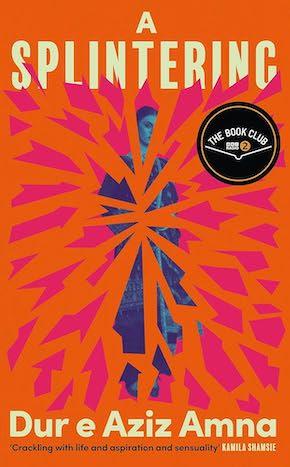
ONE DAY THE CHILDREN AND I came home to see Hamad sitting in front of the TV.
‘Why’re you home early?’ Haris asked.
‘To spend time with you,’ Hamad said, patting his lap so Haris could go and sit with him. He only had to look at me in silence and I understood what had happened. He had lost his job again.
We didn’t even fight that night. Wordlessly, we got into bed and turned away from each other, pretending to sleep. There was nothing to say. My husband was a good man, but it was clear that he was unreliable when it came to his main role – provider. I could see, with painful clarity, the life that lay in front of us. He would keep dipping in and out of jobs, never making much more than he ever had. At some point, employers would become suspicious of his CV, and he would either take an even lower-paid job or be unemployed for months. All we would have then would be my own paltry salary as an easily replaceable art teacher, a salary that hadn’t been raised in two years despite inflation. Soon, we’d be my brother’s much poorer relatives in the city. Maybe Mother would even beg Lateef to start helping us out.
No. It couldn’t be. I would not let that happen.
Then Lateef called. Chaudhary Rafiq, an important business contact of his, was coming from Lahore to visit the dairy farm my brother owned. The chaudhary was a big landowner, originally from Faisalabad, who was trying to expand into this area, looking to buy and consolidate several farms.
‘I insisted that he stay with us for a couple of days, and the chaudhary is bringing his wife. Can you come for dinner tomorrow and keep her company?’
‘Isn’t Mother going to be there?’
‘What will Mother and this woman talk about? His wife’s from generations of landed wealth. It’s better if Mother doesn’t join us at all.’
It pleased me that he thought I, unlike our mother, could pretend to some social standing. Then he continued.
‘Also, you should meet someone other than your colleagues. Don’t you want to be friends with important people?’
After a few months of playing equals and asking for my advice, my brother’s imperious attitude had returned. He had the bigger house, the AC units and the new car. There was torrential rain and flash flooding that summer, leaving the entire city without electricity. For three nights, we slept in my brother’s house, which had a generator. Since then, he had reverted to a more benign form of his old condescension.
The chaudhary and his wife had never earned a salary in their lives. They had an abandon and ease I had never seen before, a softness that comes from being born rich and that the rest of us spend our whole lives trying to achieve.”
The next day I put on my best set of clothes and some lipstick. The children stayed outside with my mother and Ali while we joined the party in the drawing room. Before I even opened the door, I could tell that these were wealthy people, like the mothers at school. The smell of expensive perfume hung in the air. The man wore a crisp cotton shalwar kameez with a waistcoat on top. The woman was dressed from head to toe in sequins, with rhinestone-studded shoes. Her face was coated with make-up, her arms laden with gold bangles. She stood up and gave me air kisses on both sides.
I had been wrong. These people were not like the mothers at the school, who, while well-off, were mostly wives of the professional class: doctors, army men, officers in the civil service, men whose worth was tied to their monthly salary. The chaudhary and his wife had never earned a salary in their lives. They were the rich of the Punjabi heartland, generous and effusive heads of verdant fiefdoms. They had an abandon and ease I had never seen before, a softness that comes from being born rich and that the rest of us spend our whole lives trying to achieve.
The lady asked about Rania and Haris, and told me about her own four children. She complimented me for being both a working woman and a homemaker. She was sweet and talkative, but throughout our conversation, I could sense the pity the feudal class maintains for professionals, a sort of breathless wonder at our dull, deprived lives.
‘Tara,’ the chaudhary said, turning to me, ‘Lateef speaks so highly of you. I have to say, I was eager to meet you.’
‘Does he?’ I asked, shocked.
‘Of course, and why wouldn’t he? How did a girl from Mazinagar make it out here and become a teacher at the best school in the city?’
‘It’s all good luck, sir.’
‘Rubbish,’ he said. ‘You know who had good luck? This one and me.’
He pointed to his wife.
‘We were born into wealth, and the best we can do is not squander it. But you and your brother, you’re the future.’
Was this the same condescension that I sensed in his wife? It probably was, but I also felt a curiosity in his gaze, which steadfastly stayed on me all night. He asked questions about the job, about the children, about my schooling in Mazinagar. Normally, it would be scandalous to give such exceptional attention to a married woman. Yet, he asked so respectfully, mingling it with his conversations with Lateef, that no one batted an eye. To my husband, he said few words, except to ask where he worked.
‘At a tax accountant’s office,’ Hamad lied.
The chaudhary frowned.
‘You know, a friend of mine is starting a big property development project and he’s looking for an accountant. I think he’d pay well.’
As we migrated to the dining table, a foot brushed against mine and stayed there, stroking it. I stared at my plate, unable to eat. Without looking, I knew whose it was. I felt dizzy and out of breath.
Afterwards, my mother brought in cups of green tea. A plan began to assemble in my mind. I was quiet the rest of the evening, but any time our eyes met, I held his gaze for as long as he could bear it.
In the bathroom that night, I looked in the mirror, imagining myself the way the chaudhary might have seen me. What had he liked about me? I leant against the door and touched myself, thinking of his foot against mine. Then I stopped and went out to the bedroom, where Hamad was reading in bed.
‘The chaudhary liked you a lot,’ he said, not looking up from the book. ‘He wouldn’t stop staring.’
There wasn’t a trace of jealousy in his voice. I sat down on the edge of the bed.
‘He could get you that job,’ I said.
He nodded, as if he had been thinking about it too. Still, he kept his eyes on the book. A long minute passed.
‘What if…’ I began, then swallowed. ‘What if I gave him something he wanted, and he helped us out in turn?’
He stared at the book. He hadn’t turned a page.
‘It could make our lives much easier.’
He looked up and fixed his gaze at a spot above my shoulder.
‘Tara, you can do whatever you want.’
‘And you? What do you want?’ I asked, my heart wild inside my chest.
Finally, he looked me in the eye.
‘I want to be left in peace.’
from A Splintering (Duckworth, £16.99)
—
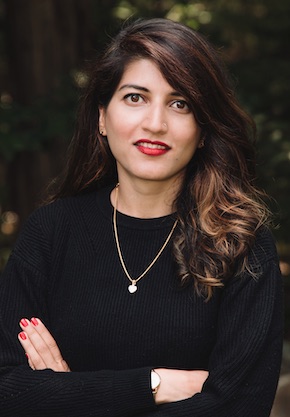
Dur e Aziz Amna is the author of American Fever, winner of the 2023 South Asian Book Award and the APALA Award for Literature. Her work has appeared in the New York Times, Financial Times and Al Jazeera, among others. She was selected as Forbes 30 Under 30 in 2022 and won the 2021 Salam Prize and the 2019 Financial Times/Bodley Head Essay Prize. She is a graduate of Yale College and the Helen Zell Writers’ Program at the University of Michigan. Born and raised in Pakistan, she now lives in the US. A Splintering, A BBC Radio 2 Book Club pick, is published by Duckworth in hardback and eBook, and in audio by W.F. Howes.
Read more
dureazizamna.com
instagram: @dureamna
@duck_books
@duckworthbooks.bsky.social
Author photo by Nelson Pinheiro


