
Opening lines
by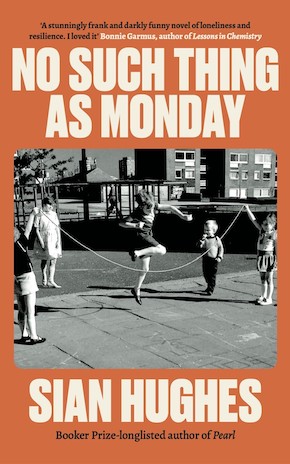
‘I walked into the back room at Dad’s house about midday with his dinner on a plate covered in cling film in one hand and a bowl of crumble and custard in the other, and he was dead in his chair.’
The opening of Siân Hughes’ new novel offers an attention-grabbing foretaste of horrors and humour to come. In a rueful yet raucous tale of estranged sisters and their overbearing, bullying father, the narrator Steffie looks back on Stanley’s low-life adventures in bare-knuckle fighting and other illegal scrapes, and her own struggles through childhood, school, low-grade jobs and descent into substance abuse. On a hunch, we asked Siân for a Top Ten list of her own most memorable opening lines, and they don’t disappoint…
—
1. E.B. White: Charlotte’s Web
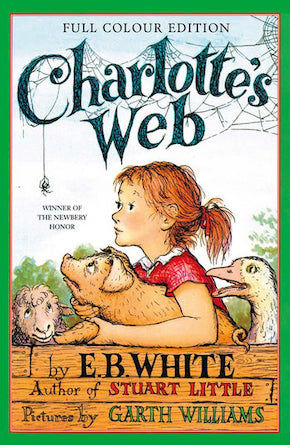
‘Where’s Papa going with that axe?’
Isn’t this everyone’s favourite? I put it at number one, and all the others are joint second. You have to find out what crime that man with the axe is off to commit. From the first time she opens her mouth, Fern has hero written all over her.
2. Peter Carey: Bliss
Harry Joy was to die three times, but it was his first death which was to have the greatest effect on him, and it is this first death which we shall now witness.
I love the detachment of the narrator. We are held suspended in mid-air, seeing all that the spirit of Harry Joy can see on his brief visit to the world of spirits. All through the book we have this ability to float free of the body of the main character and see with the cool eye of a ghost, and it is all there in the opening sentence. And don’t you want to go on and find out about his other deaths? I did.
3. Thomas Lynch: The Undertaking
Every year I bury a couple hundred of my townspeople. Another two or three dozen I take to the crematory to be burned. I sell caskets, burial vaults, and urns for the ashes. I have a sideline in headstones and monuments. I do flowers on commission.
This memoir by the poet and undertaker Thomas Lynch is a masterclass in precision. It is a poet’s book in that it pares down all its observations into the kind of detail that bores into your soul. I have lost track of how many times I have read it, and it still surprises me. I never tire of its understated and devastating opening.
4. Russell Hoban: Riddley Walker
On my naming day when I come 12 I gone front spear and kilt a wyld boar he parbly ben the las wyld pig on the Bundel Downs any how there hadnt ben none for a long time befor him nor I aint looking to see none agen. He dint make the groun shake nor nothing like that when he come on to my spear he wernt all that big plus he lookit poorly. He done the reqwyrt he ternt and stood and clattert his teef and made his rush and there we were then. Him on 1 end of the spear kicking his life out and me on the other end watching him dy. I said, ‘Your tern now my tern later.’
Diving into the post-apocalyptic language of Riddley Walker you know from the first sentence you are hearing the voice of a true seer and philosopher. Every re-made word or phrase is resonant with its old meaning and layered up with interpretation. He is made of riddles, but he walks through the story with utter grace. You think – will I even understand this new language? But you do. You understand more of your own for reading it.
5. Niall Williams: Time of the Child
This is what happened in Faha over the Christmas of 1962, in what became known in the parish as the time of the child.
To those who lived there, Faha was perhaps the last place on earth to expect a miracle. It had neither the history not the geography for it.
So there IS going to be a miracle. We know from the start. How deeply reassuring to see the story unfold while we hold on to that opening promise. Miracles happen where we least expect them. Transformation and redemption are going to appear out of the mud and darkness. However messy and undignified, divinity will appear in human form.
I will never see the word ‘over-emote’ again without laughing. Once it has been handled like this, the language cracks open and shows its ridiculous and wonderful underbelly.”
6. Mary Ruefle: My Private Property
At headquarters they asked me for something dry and understated. Mary, they said, it’s called a statement. They took me out back to a courtyard where they always ate lunch, and showed me a little tree that was, sadly, dying. Something with four legs had eaten it rather badly. Don’t over-emote, they said. I promised I wouldn’t but I was thinking to myself that the something-with-four-legs had certainly over-emoted and that the tree, in response, was over-emoting now, being in the strange little position of dying.
Well if you start laughing in the first two lines, you are going to want to go on reading, aren’t you? I will never see the word ‘over-emote’ again without laughing. Once it has been handled like this, the language cracks open and shows its ridiculous and wonderful underbelly. Believe me every page is this good.
7. Lemn Sissay: My Name Is Why
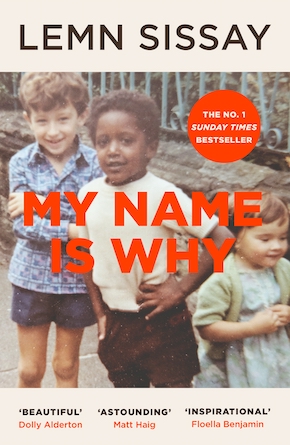
At fourteen I tattooed the initials of what I thought was my name into my hand. The tattoo is still there but it wasn’t my name. It’s a reminder that I’ve been somewhere I should never have been. I was not who I thought I was. The Authority knew it but I didn’t.
Technically this is the opening to the preface rather than the first chapter, but let’s not split hairs, we have our hero, carving out his identity, we have the baddy, we have the quest for truth. It’s all there, and we want to know how the battle will be won. It never flags for a second. I could pick almost any sentence really. Read it and weep.
8. Anne Tyler: Searching for Caleb
The fortune teller and her grandfather went to New York City on an Amtrak train, racketing along with their identical, peaky white faces set due north. The grandfather had left his hearing aid at home on the bureau.
Two travellers set out on a quest. One earns a living telling the future. One cannot hear a word. They are locked in their separateness, but held by the family likeness, facing due north, which is surely some kind of metaphor for a spiritual journey. Don’t we long to find out how they came to be so tied together in this, to find out where they are going, and why?
9. Anne Holm: I am David
David lay quite still in the darkness, listening to the men’s low mutterings. But this evening he was aware of their voices only as a vague meaningless noise in the distance, and he paid no attention to what they were saying.
’You must get away tonight,’ the man had told him. ‘Stay awake so that you’re ready just before the guard’s changed. When you see me strike a match, the current will be cut off and you can climb over – you’ll have half a minute for it, no more.’
I love an escape story. Some of my favourites, like Susanna Clark’s Piranesi or Maggie O’Farrell’s The Marriage Portrait, leave you to work out that this is a prison, and the only happy ending is the one where they break out. It takes you a while to find out. This one tells you right away, and the first step of the escape is only seconds away.
10. Barbara Kingsolver: Demon Copperhead
First, I got myself born. A decent crowd was on hand to watch, and they’ve always given me that much: the worst of the job was up to me, my mother being let’s just say out of it.
I was tempted to try and choose which Dickens opening I like best. Lots of the most famous openings are there, and it’s hard for a fan like me to pick one. But Kingsolver’s take on David Copperfield took me into the voice of the hero from the first moment, and had me by the throat. Dickens would be proud of her. Demon Copperhead’s voice sings out, however you hear it in your head, and as soon as he spoke to me, I loved him.
—

Siân Hughes lives in rural Cheshire and is a Royal Literary Fund Writing Tutor based at the University of Liverpool. Her first collection of poetry, The Missing (Salt, 2009), was longlisted for the Guardian First Book Award and won the Seamus Heaney Award, among other accolades. Her first novel Pearl (The Indigo Press, 2023) was longlisted for the Booker Prize and shortlisted for the Authors’ Club Best First Novel Award. It has been published in many languages worldwide. No Such Thing As Monday is published by The Indigo Press.
Read more
instagram.com/theindigopress
Author photo by Stretton Studios


