
Love all
What is literature if not a way to frame our vision of the world? What is language if not a prism through which to think, explore, relate, question, resolve, civilise – or merely (and vitally) voice despair? And what is love if not the ultimate Socratic demon, fusing together human lives, welding experiences, yielding truths,...

Apparitions
One afternoon on a weekend in March, Dewi Ayu rose from her grave after being dead for twenty-one years. A shepherd boy, awakened from his nap under a frangipani tree, peed in his shorts and screamed, and his four sheep ran off haphazardly in between stones and wooden grave markers as if a tiger had...
Edelweiss on the Black Sea
How it warms the soul to discover – amid naked rock, amid eternal snow, beside a cold, dead glacier – a tiny velvety flower, an edelweiss. In this realm of icy death it alone is alive. It says, “Don’t believe in the horror that surrounds us both. Look – I’m alive.” How it warms the...
Reading Europe
Now in its eighth year, European Literature Night (ELN) returns with an expanded programme under the banner of the newly inaugurated European Literature Festival. Presented by EUNIC London, ELF is a six-week celebration of literature from across the continent, with more than 60 writers and poets from over 30 countries involved in events and projects from 27...
A mirage of horrors
“Our language lacks words to express this offence, the demolition of a man.” Primo Levi The question of how one writes, thinks or speaks about the holocaust and the ideologies and sociohistorical conditions that spawned it, is perhaps as vital now as it was in the direct aftermath of a period when the word ‘hell’...

Divine wonderlands
Since at least the early twentieth century, the question of identity, the vital reality or stark falsehood of such a concept, has been at the core of the most serious literary writing. From existential anxiety and historical misappropriation, to the dispossession or conscious denial of individuality, writing now seems to be at an even more...
Memory’s martyr and keeper
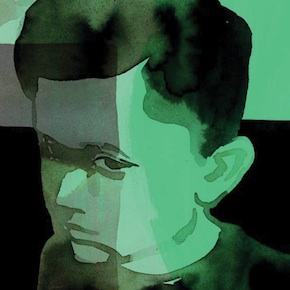
Patrick Modiano has often said that he is writing constantly, persistently, invariably but with almost infinite variations, the same book. And at the centre of each of his novels, almost like a reverberating echo or clinging shadow, is the story of himself in search “for mystery where there was none”, for the “transparency” (of memory,...
She who is not her
I have no idea what time it is. Someone is lying beside me. It’s not her. My head is not my head. She who is not her is actually quite pretty. I’m still drunk. She who is not her is still here. I pull away the covers. She who is not her is still quite...
From the heart
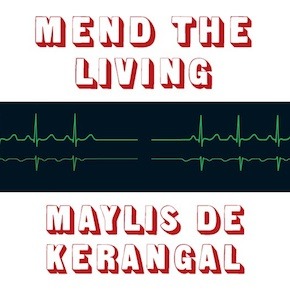
The title of Maylis de Kerangal’s second novel in English comes from Platonov, an unfinished and seldom performed play by Chekhov. One of his earliest works, ‘Little Plato’ is a distillation of every human gesture and movement, the ideas and existential questions that were to define Chekhov’s later work in its entirety. Above all, the...

Approaching Onegin
Alexander Pushkin is, by universal assent, the most important figure in the history of Russian culture, and his finest work is Yevgeny Onegin (1823–31). He is to Russia what Dante is to Italy, Shakespeare to England and Cervantes to Spain, and for the Russians his novel in verse is a rough equivalent to those other...
Body, soul and shadow
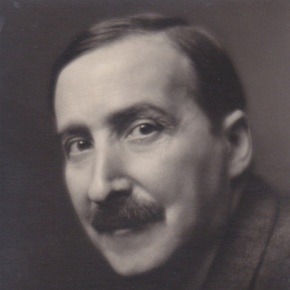
Our bodies are piled on top of each other in the shape of a cross. The body of a man I don’t know has been thrown across my stomach at a ninety-degree angle, face up, and on top of him a boy, older than me, tall enough that the crook of his knees press down...


