

Driving to distraction
Sonja is sitting in a car, and she’s brought her dictionary along. It’s heavy, and sits in the bag on the backseat. She’s halfway through her translation of Gösta Svensson’s latest crime novel, and the quality was already dipping with the previous one. Now’s the time I can afford it, she thought, and so she...
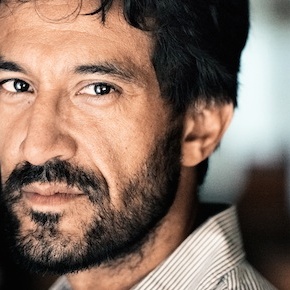
Steven Uhly: A life of encounters
The chance to converse with Steven Uhly is not just a meeting but a real and even formative encounter, a moment of wisdom, laughter, serious and relaxed humanity. He is someone with a very distinct presence, ineradicable and self-effacing at the same time, poetic and materially concrete. He exudes indomitable strength and very serene, reflective...
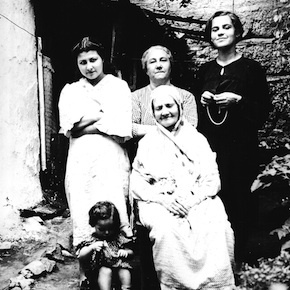
All the women I ever imagined
I had been in Germany for almost a year by now. One dark and rainy day in November – how clearly I remember it – I was skimming the newspaper when I noticed an article about an exhibition of new painters. In truth, I did not know what to make of this new generation. Perhaps...
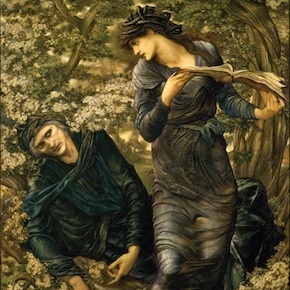
Vagrant tales
Before Greece embraced modernity and its marvels, it was a nation of stark realities and pernickety sprites. Lore and legend held as much validity as did hard facts in the popular imagination, but also in the synthesis of what was no less than a national soul. Sprites, trolls, crones, harridans and ogres, with innumerable names,...
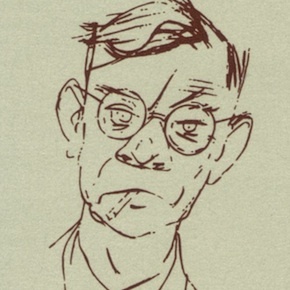
Wraiths of neither good nor evil
With the hindsight of history, with the raw, stinging feeling on the skin of one’s conscience of the viciousness and harrowing desolation that was spawned by Nazi rule and WWII, it may seem that there was for Germany a distinct separation between a brutal, all-obliterating moment of total guilt and a redeeming ‘moment after’ of...
The hydra of memory and forgetting
“If you have no wounds, how can you know you are alive?” wrote Edward Albee in 1998’s The Play About the Baby. Steven Uhly’s Kingdom of Twilight could be said to be all about physical, psychological and historical wounds and about the true meaning of knowing oneself to be alive – the true worth of...
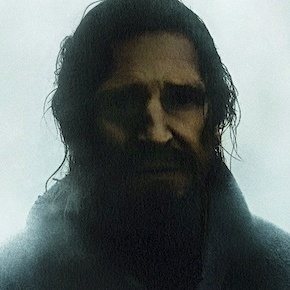
On Silence
How do you tell the story of Christian faith? The difficulty, the crisis, of believing? How do you describe the struggle? There have been many great twentieth-century novelists drawn to the subject – Graham Greene, of course, and François Mauriac, Georges Bernanos and, from his own very particular perspective, Shusaku Endo. When I use the...
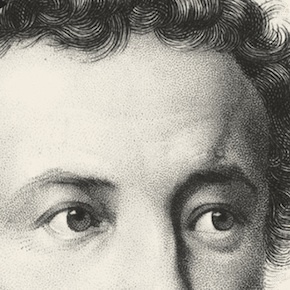
Dalliances at the dacha
On rereading Pushkin’s fictional fragment ‘The guests were arriving at the dacha’ for about the seventh time in 1873, Leo Tolstoy found himself transported and inspired. “Despite myself,” he noted, “not knowing where or what it would lead to, I imagined characters and events, which I developed, then naturally modified, and suddenly it all came...
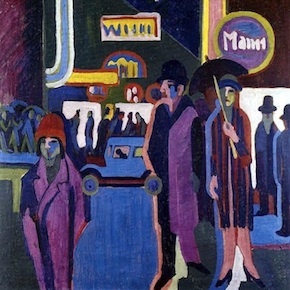
Berlin by twilight
“Who in all the world goes to Berlin voluntarily?” wrote Joseph Roth in The Wandering Jews in 1926–27. For him, as for so many others who were acutely attuned to the particular dissonances of a global order in turmoil, Berlin represented the metaphorical and real space of a harrowing existential predicament: the new paradigm for...
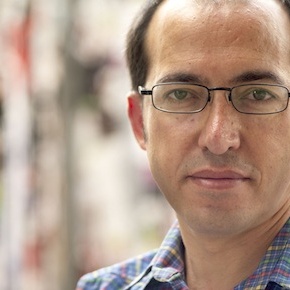
Burhan Sönmez: Istanbul light and dark
Burhan Sönmez’ latest novel Istanbul Istanbul is set in a cramped two-by-one-metre prison cell beneath the teeming city, where a student, a doctor, a barber and a frail activist regale each other with stories, parables and riddles to fill the time between brutal interrogations. Readers are transported from the oppression of the dingy cell by...

Enchanted by the mystery of books
Ana Pérez Galván, the tranquil force behind Hispabooks, has an unwavering dream: to publish new writing from every corner of Spain in English translation, and to change readers’ perceptions of Spanish literature as eternally oscillating between the two monumental poles of Cervantes and Lorca; to revise our view of Spain as being only the realistic...
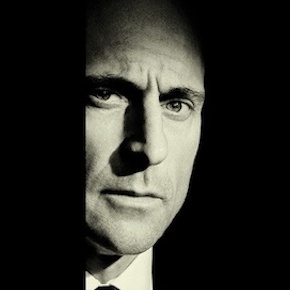
A night in the barn
David Hare’s The Red Barn, his latest sell-out play at the National Theatre, is a bold adaptation of Maigret creator Georges Simenon’s hitherto obscure novel Le Main, which is also now released by Penguin Classics in a new translation. In the depth of winter in 1950s Connecticut, Donald and Ingrid Dodd (Isabel in the novel)...


